Brand identity is more than a logo: what it includes and how to choose a designer
A logo is one piece of a much bigger system. Here’s what a real brand identity includes, why it matters for a business in Hurghada, and how to pick the right designer.
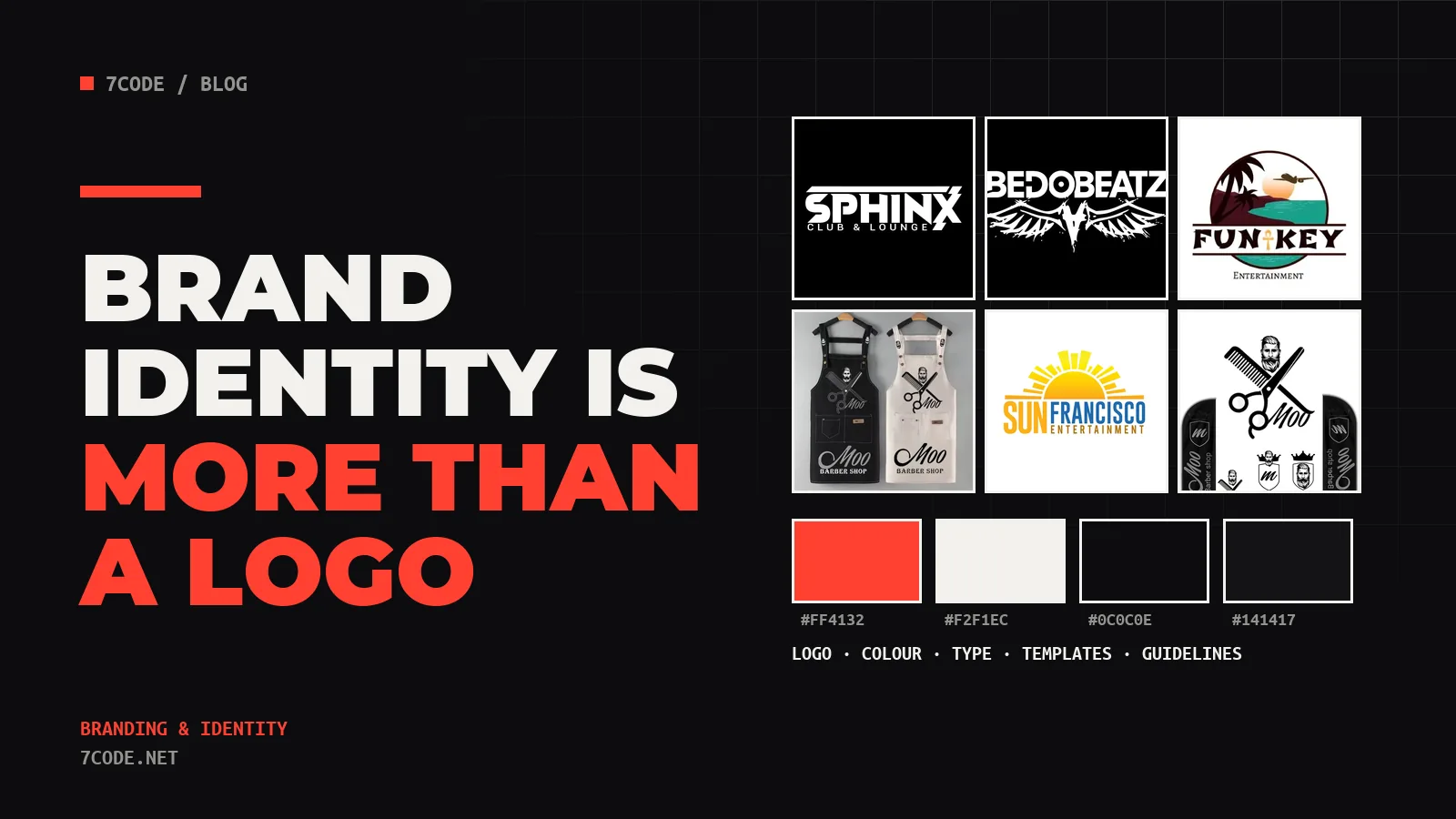
A lot of new businesses come to us asking for “just a logo” — a café about to open, a barber shop, an events company, a club starting a new weekly night. It makes sense: the logo is the most visible part of a brand.
But a logo on its own doesn’t do much. It needs colours, type, photos, layouts and a few rules around it before it can carry a business across a sign, a menu, an Instagram feed and a website. That whole system is your brand identity. Here’s what it includes, and how to choose someone to build it.
What a brand identity actually includes
A complete identity is a toolkit. The exact list depends on the business, but most good ones include:
- The logo and its versions. The main logo, a simplified mark or icon, horizontal and stacked versions, and versions for dark and light backgrounds. A logo that only works big on white will struggle as a profile picture or on a dark flyer.
- A colour palette. Main and supporting colours, with exact codes for screen and print, so your red is the same red everywhere.
- Typography. One or two typefaces with clear roles: headlines, body text, small labels. If you need Arabic, choose an Arabic typeface that sits well next to the Latin one.
- Graphic elements. Patterns, shapes, icons, frames or textures that make your materials recognisable even without the logo.
- Photo and video style. Bright or moody? People or products? Close-ups or wide shots? A clear direction keeps your content consistent, whoever shoots it.
- Tone of voice. How the brand talks — formal or friendly, playful or calm — in English and in Arabic.
- Templates. Ready layouts for the things you make often: social posts, stories, flyers, menus, price lists.
- Brand guidelines. A short document that explains all of the above, so your team, your printer and any future designer can use the brand correctly.
Why it matters, especially in Hurghada
Hurghada is a competitive, visual market. Visitors choose between many restaurants, boats and venues, mostly based on what they see on a phone screen. A consistent identity helps in three ways:
- Recognition. When every flyer, story and sign clearly belongs to you, people remember you faster.
- Trust. A business that looks put-together feels more reliable — which matters when a guest is choosing where to spend one of only a few evenings on holiday.
- Speed. With templates and rules in place, every new post, menu or campaign takes less time and looks better.
A clear identity also makes life easier for everyone who works with you — the printer, a new designer, the social media team — because they can produce work that looks like you without you explaining everything from scratch each time.
We see this most clearly with clubs. For Sphinx Club we built a flexible event identity — type, colour and layout rules — so every weekly night and seasonal campaign can look different while still feeling like Sphinx.
Design for every touchpoint
Think about every place a customer meets your brand: the sign outside, the menu, uniforms and aprons, receipts, your Instagram, your website, WhatsApp messages, even the bags or packaging you hand out.
When we worked on the identity for Moo Barber Shop, the logo had to work as a large graphic for the shop and as a small mark on the barbers’ aprons — two very different sizes, materials and backgrounds. A good identity is designed with those real uses in mind from day one, instead of being stretched to fit them later.
How to choose a designer
Whoever you hire, a few questions will tell you a lot:
- Do they ask about your business first? A good designer wants to know your customers, your competitors and your plans before drawing anything. If someone starts sketching before asking a single question, be careful.
- Does their portfolio show systems, not just logos? Look for flyers, menus, social media and signage that clearly belong to the same brand.
- Can they design in Arabic and English? If your business needs both, check that their Arabic typography is as strong as their Latin work.
- What exactly will you receive? Ask for a clear list: logo files and formats, colour codes, fonts, templates and guidelines.
- Who owns the final files? You should own the rights and receive the editable source files.
- How many rounds of changes are included? Agree on this at the start to avoid surprises.
- Can they help you use it? An identity only pays off when it’s applied well — on social media, on your website and in print.
Red flags
- A logo delivered within a day, with no questions asked
- Designs that look suspiciously like a template or another brand
- A single image file, with no versions and no source files
- No thought about how the logo looks small, in one colour or on a dark background
If a designer never asks who your customers are, they’re designing for themselves — not for your business.
How we work on branding at 7Code
We start with a conversation about your business and your customers, explore a few directions, refine one together, and then build the system around it: logo versions, colours, type, templates and guidelines. Because we also handle social media, websites, photography and print, we design every identity knowing exactly where it’s going to live.
If you’re starting a business or your current look no longer fits, read more about our branding and identity service, or request a quote. Run a venue? Our guide to planning a week of events on social media shows an identity at work.
More articles
All articles →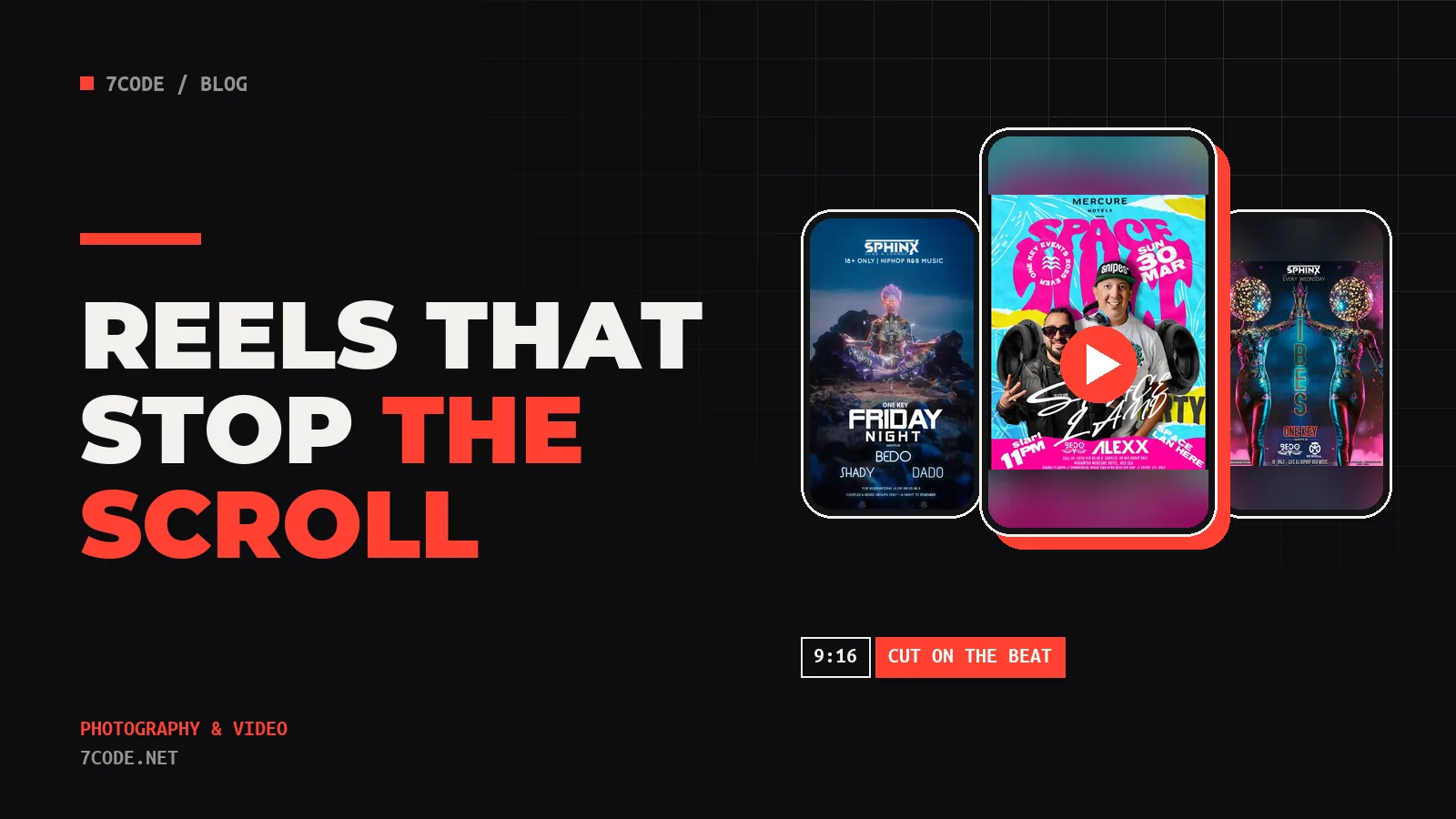
Reels for hotels & venues: content that stops the scroll
Practical shooting and editing tips for hotel, beach and nightlife reels — from the first second to the caption — based on the reels we film and edit in Hurghada.
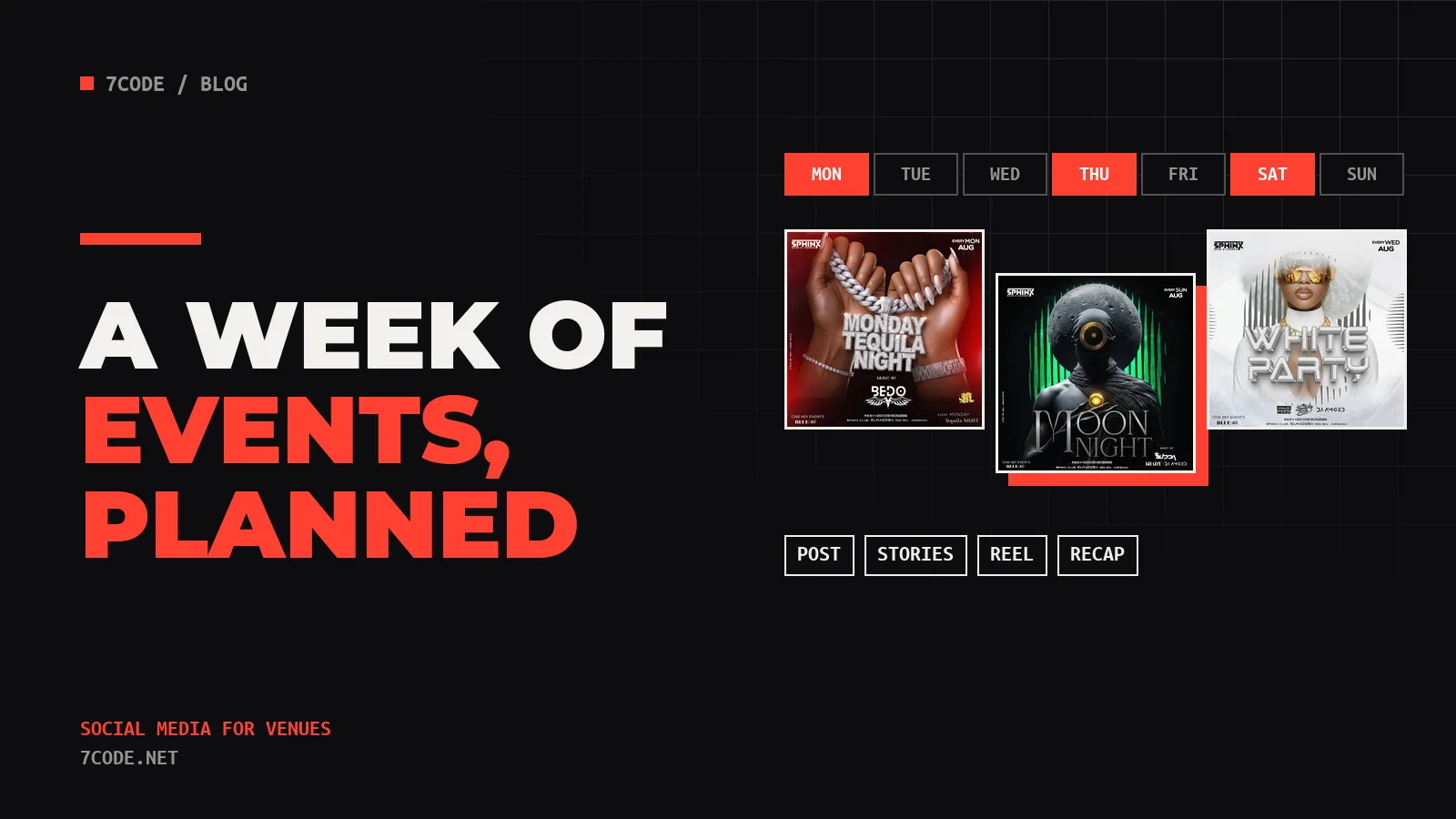
Social media for clubs & venues: planning a week of events, flyers and stories
A club lives on a weekly rhythm. Here’s how we plan a week of event content — flyers, stories and reels — so every night is promoted on time and the feed still looks like one brand.
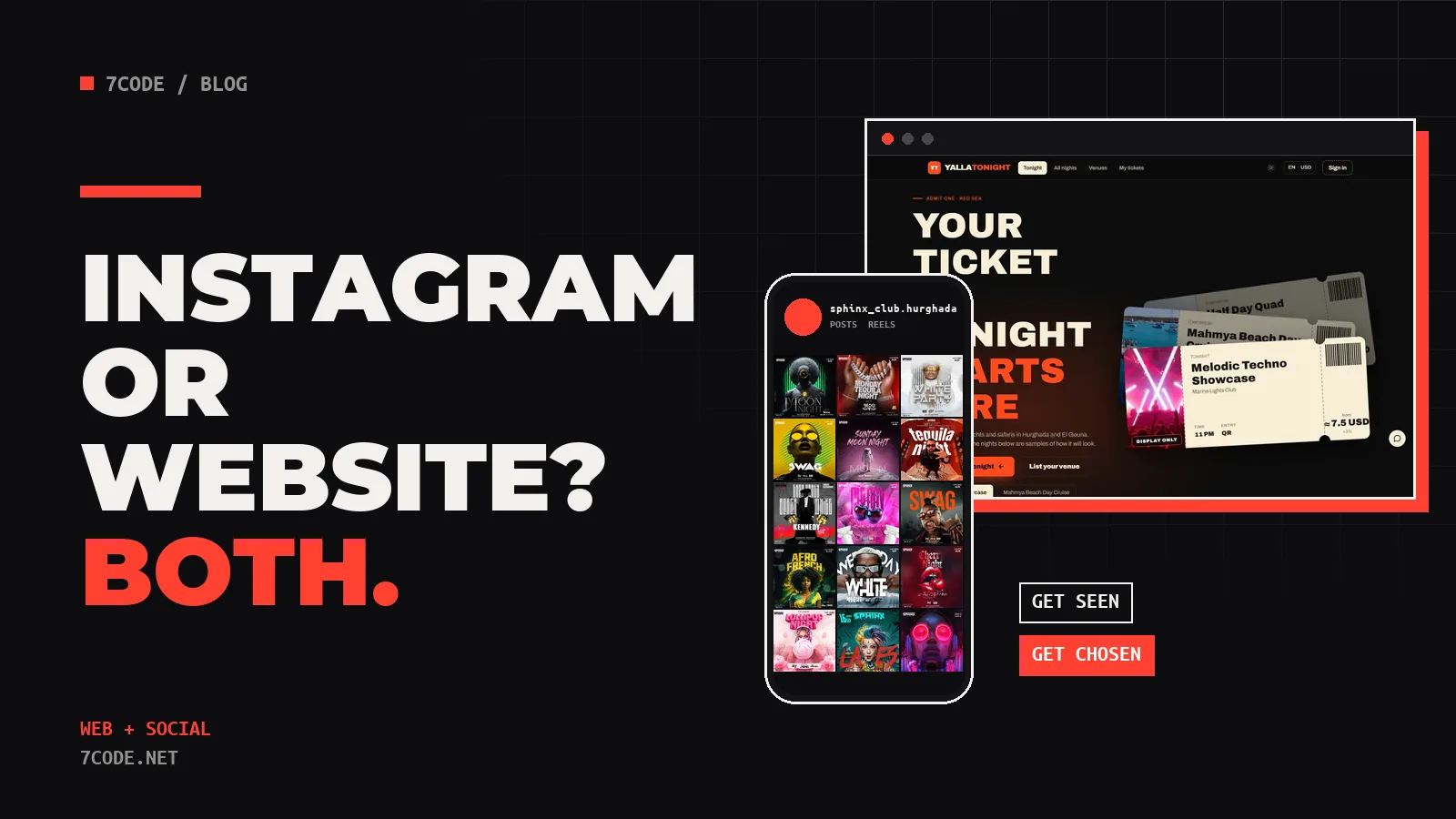
Instagram page or website? Why your business needs both
Instagram gets you noticed; a website gets you chosen. Here’s how the two work together for cafés, clubs, tour companies and shops in Hurghada.