Instagram page or website? Why your business needs both
Instagram gets you noticed; a website gets you chosen. Here’s how the two work together for cafés, clubs, tour companies and shops in Hurghada.
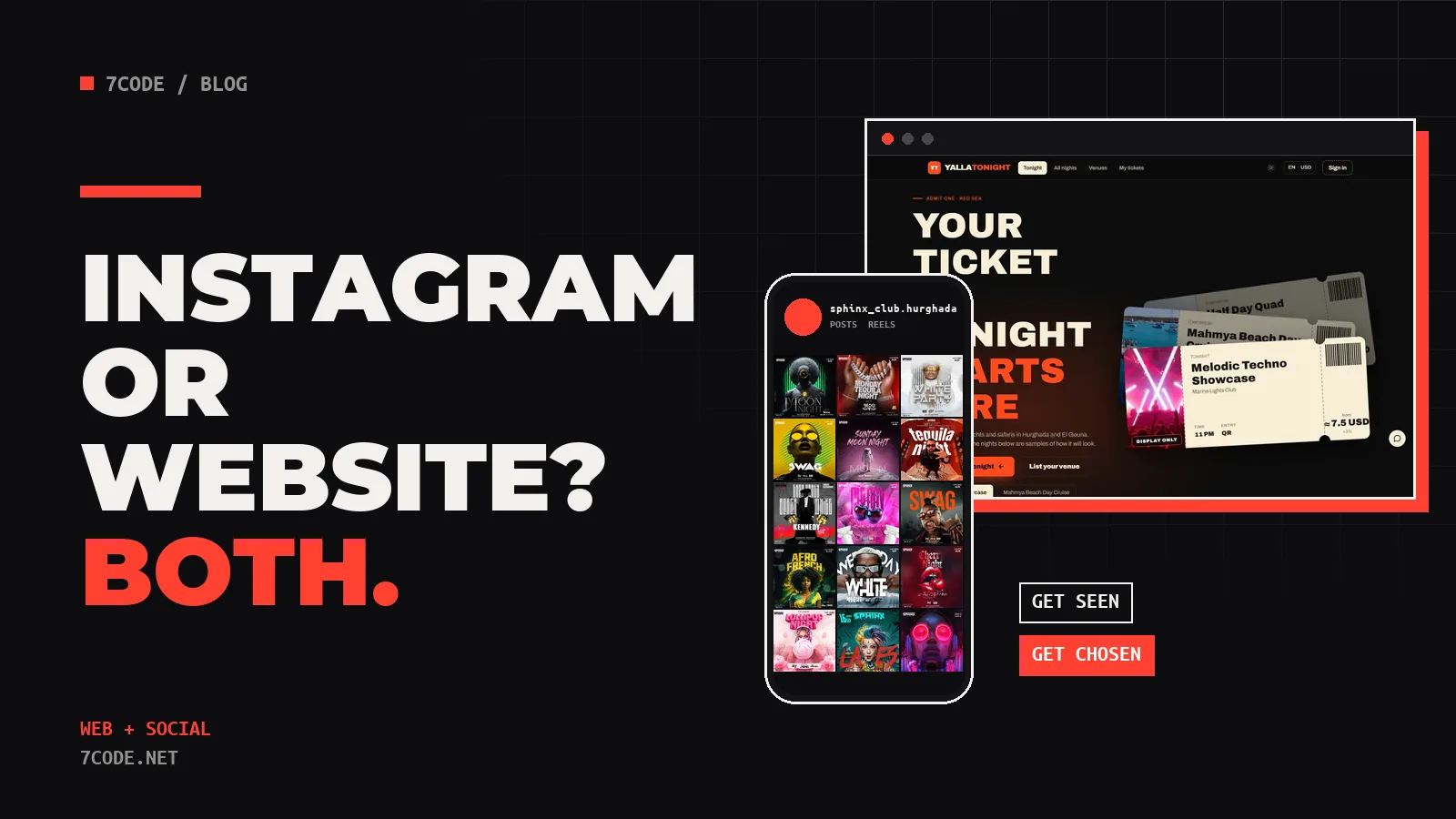
Plenty of businesses in Hurghada run entirely on Instagram — and for a while, it works. You post, people like it, someone sends a message, you continue on WhatsApp. So why would you need a website?
Because Instagram and a website do different jobs. Instagram is where people notice you. A website is where they decide. We run social media for venues like Sphinx Club and build websites for tour companies, platforms and artists, so we see both sides every day. Here’s how to think about it.
What Instagram does best
Instagram is hard to beat at a few things:
- Discovery. Reels, hashtags, location tags and shares put you in front of people who have never heard of you.
- Mood. Photos and videos show what your place feels like — the music, the crowd, the food, the sea.
- Rhythm. A club with events every week, a restaurant with daily specials, a beach bar with sunset sessions: Instagram is made for things that change often.
- Conversation. Comments and messages make it easy to ask a quick question.
If you’re a nightlife venue, Instagram isn’t optional. It’s where the night starts.
Where Instagram falls short
The same platform has real limits:
- You don’t own it. The algorithm decides who sees your posts. An account can be hacked, restricted or lost, and your reach can drop overnight for reasons nobody will explain.
- Information is hard to find. Opening hours, prices, the menu, the location, how to book — buried in highlights, old posts and a short bio.
- Google barely sees it. When a tourist searches for “boat trip Hurghada” or “restaurant El Gouna”, your posts rarely show up. A website can.
- Not everyone is on it. Some customers — many older travellers and business clients among them — don’t use Instagram, or don’t trust a business that only exists there.
- It can’t take a booking properly. Messages are fine for a question or two. They’re painful for dates, numbers of people, pickup details and payment.
None of this means you should leave Instagram. It means you shouldn’t put all your eggs in one basket.
What a website does that Instagram can’t
A website is the one place online that you fully control.
- It answers questions. What you offer, where you are, when you’re open, what it costs and how to book — all on clear pages.
- It shows up on Google. Each page can appear for what people are searching for, in each language you need.
- It builds trust. Your own domain and a proper site tell visitors you’re a serious business.
- It turns interest into action. Booking forms, quote requests, QR tickets and online payments turn a like into something real. That’s what we built for YallaTonight: guests find the night, see the venue, time and entry price, and get a QR ticket on their phone.
- It belongs to you. Your content, your customer details, your data.
Why you need both
The two work best as a loop:
- Someone sees your reel, or a friend’s story at your place.
- They visit your profile, like what they see and tap the link in your bio.
- Your website answers their questions and gives them an easy way to book, order or get in touch.
- After their visit they tag you and post a story — and the loop starts again with their friends.
Instagram gets you noticed. A website gets you chosen.
Without Instagram, fewer people discover you. Without a website, many of the people who discover you drop off somewhere between “this looks nice” and “how do I actually book?”
Make the link in bio work hard
The link in your bio is the bridge between the two, and most businesses waste it.
- Point it to your own website, not to a generic link page with ten buttons.
- Send people to the page that matches what they came for: tonight’s events, the menu, the trip list or the booking page.
- Make sure that page loads fast on a phone — they’re coming from Instagram, so they’re on a phone.
- Give them one clear next step: book, reserve, or ask on WhatsApp.
Keep the two consistent
Your feed and your site should feel like the same brand: the same logo, colours, fonts and tone of voice. When someone jumps from your profile to your site, there should be no doubt they’re in the right place. That’s one reason we often handle branding, social media and the website together — consistency is much easier when one team sees the whole picture.
If you can only start with one
If you’re brand new and the budget is tight, start where your customers are. For a nightlife venue, that’s usually Instagram first, with a simple website soon after. For a tour company, a hotel or any business that lives on Google searches and bookings, the website comes first and Instagram supports it.
A simple website doesn’t have to be big to start working: a clear home page, a page for your menu, services or trips, an events page if you have them, your location and opening hours, and a WhatsApp button on every page. That’s a solid start — and the site can grow with you later, with online booking, more languages or a dashboard you edit yourself.
Either way, plan for both. One gets you seen; the other gets you chosen.
Want help with one side or both? Read about our web development and digital marketing services, or request a quote.
More articles
All articles →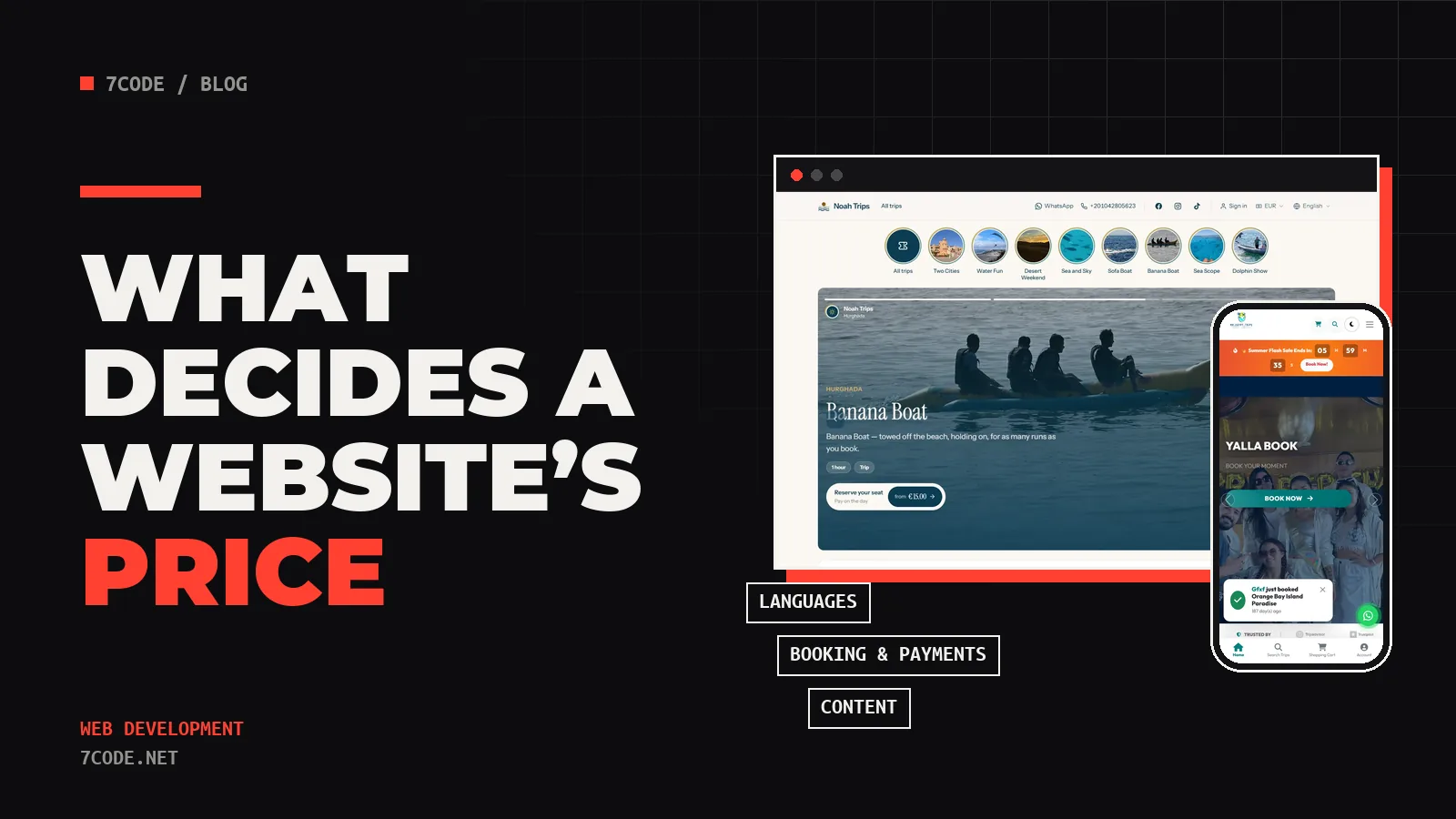
How much does a website cost in Hurghada? What actually decides the price
There’s no honest one-number answer — but there are clear factors behind every quote. Here’s what really moves the price of a website, and how to plan yours.
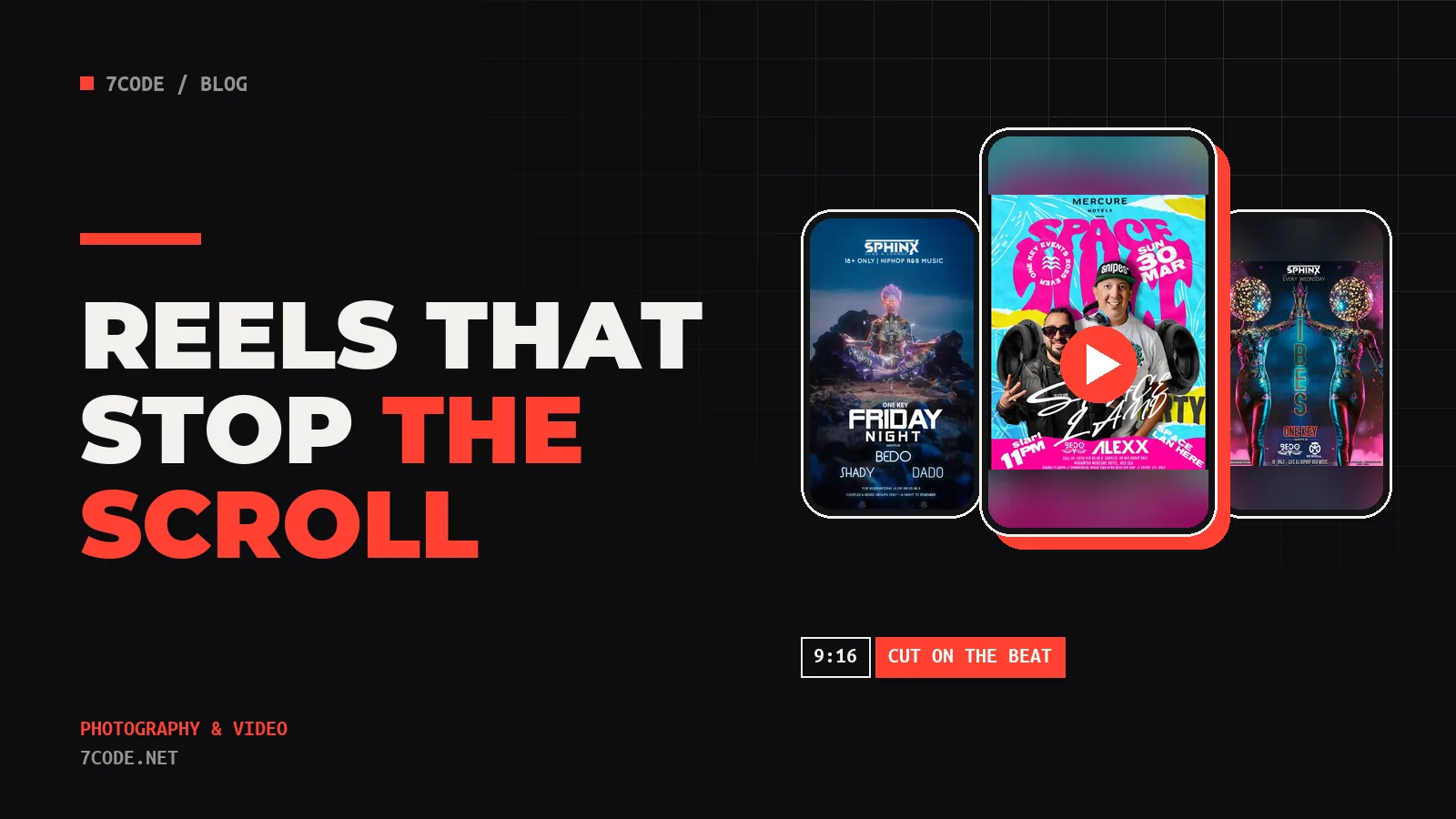
Reels for hotels & venues: content that stops the scroll
Practical shooting and editing tips for hotel, beach and nightlife reels — from the first second to the caption — based on the reels we film and edit in Hurghada.
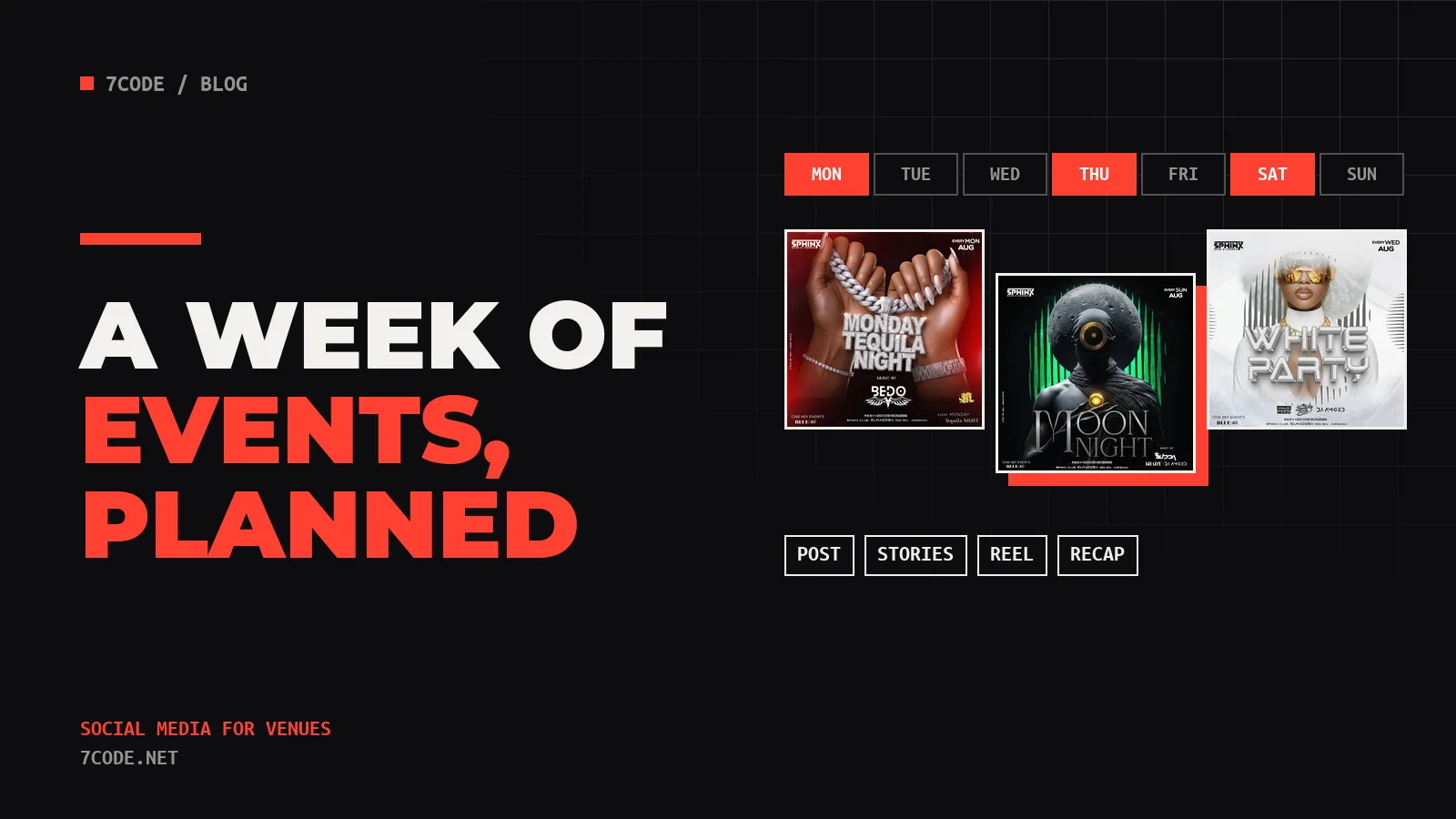
Social media for clubs & venues: planning a week of events, flyers and stories
A club lives on a weekly rhythm. Here’s how we plan a week of event content — flyers, stories and reels — so every night is promoted on time and the feed still looks like one brand.