How much does a website cost in Hurghada? What actually decides the price
There’s no honest one-number answer — but there are clear factors behind every quote. Here’s what really moves the price of a website, and how to plan yours.
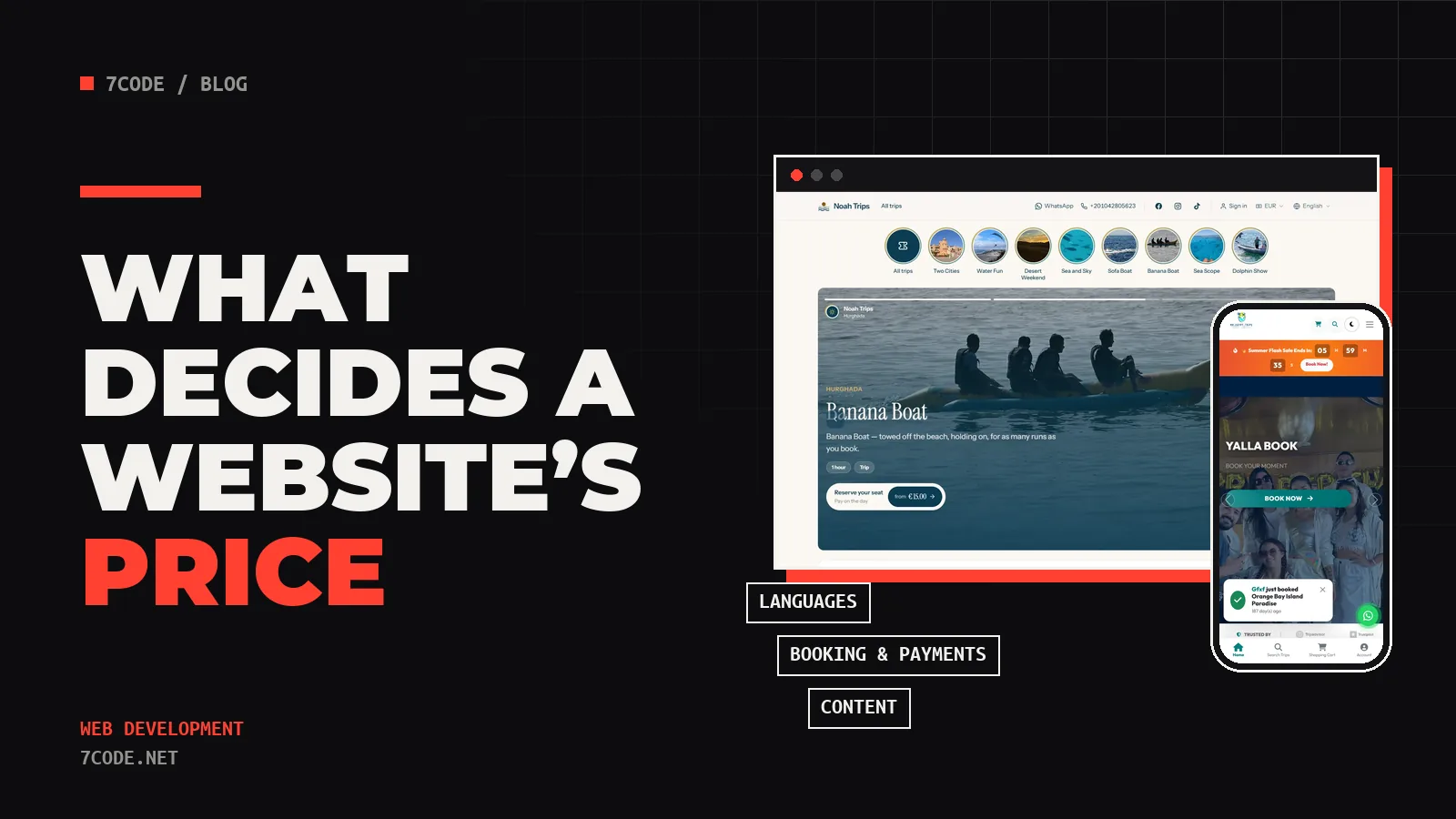
If you’ve asked three people in Hurghada what a website costs, you’ve probably heard three answers that have nothing in common. Nobody is necessarily lying. “A website” can mean one page with your phone number on it, or a booking system that takes payments in several currencies and eight languages. The word is the same. The work is not.
We hear this question all the time at 7Code, so here’s the honest version: this article won’t give you a number, because a number without your details is a guess. What it will do is show you what actually moves the price up or down — so you can read any quote, from us or anyone else, and know exactly what you’re paying for.
What the site has to do
The biggest factor isn’t the number of pages. It’s the job the site has to do.
- A presence site tells people who you are, shows your work and makes it easy to call or message you. Most of the effort goes into design, content and speed.
- A lead site is built to collect enquiries: quote forms, clear calls to action, WhatsApp buttons and tracking, so you know which page brought the customer.
- A booking or shop site handles trips, dates, availability, prices and sometimes online payment. That’s logic, not just layout — and logic needs building and testing.
Every step up adds work behind the scenes. When we built Noah Trips, the pages you see were only part of the project. The pickup checker by hotel, the “reserve now, pay on the day” flow and quick booking over WhatsApp were the real engineering.
Languages, and right-to-left
In Hurghada, your customers often don’t speak your language. A tour company may need English, German, Russian, Polish, Italian, Czech and Arabic. A restaurant may be fine with two.
Each extra language means more than pasting a translation:
- every page, button, form message and email has to be translated and checked
- layouts must survive longer words in German and the flipped direction of Arabic
- each language needs its own titles and descriptions, so Google shows the right version to the right visitor
A two-language site and an eight-language site with the same design are two different projects. Decide early which languages actually bring you customers, and start there.
Template or custom design
A ready-made template is quicker at the start, and for some businesses it’s enough. The trade-off shows later: you bend your content to fit the template, it looks like plenty of other sites, and the changes you need can be awkward to make.
A custom design is planned around your brand, your content and the way your customers decide. It takes more thinking up front. We design every site from scratch at 7Code because we’ve seen how much a clear, fast, branded site helps people trust a business they’ve never visited — but the right choice depends on what the site has to achieve.
Content: who writes it, who shoots it
Content is the part almost everyone underestimates. Texts, photos, videos, menus, trip descriptions, prices, booking policies — someone has to produce all of it.
If you arrive with good photos and clear texts, the build moves faster. If the agency also needs to write copy, translate it, shoot photos or edit video, that’s extra work. It’s usually also the work that makes the biggest difference to how the site sells. A beautiful design with weak photos still looks weak, which is why we often pair a website with photography and video.
Features and integrations
These are the line items that quietly add up:
- online payments, including testing and refunds
- WhatsApp buttons with a pre-written message
- a currency switcher
- customer accounts, loyalty points or saved bookings
- maps, reviews and social feeds
- connections to other systems: booking engines, email tools or your CRM
Each one is reasonable on its own. Together they can double the scope. Split your list into must-haves for launch and nice-to-haves for later — it’s the easiest way to control the budget without losing what matters.
Editing it yourself
Will you change prices, trips or events every week? Then you need an admin dashboard, so you’re not waiting on a developer for every update. A dashboard takes longer to build, but it saves time and money every month after launch. If your site rarely changes, you may need very little here.
The parts you don’t see
Two sites can look identical in a screenshot and be very different underneath. Does it load quickly on a phone over weak hotel Wi-Fi? Does each page have a proper title and description? Is there a sitemap, structured data, analytics and Google Search Console? Is the code clean enough to grow with you?
None of this shows in a design preview, but it decides whether people find you — and whether they stay long enough to book.
After launch: hosting, domain and support
A website is not a one-time purchase. The domain and hosting renew every year, you may want business email, and someone has to look after backups, security updates and the day something stops working.
Ask every provider the same questions. Who owns the domain? (It should be you.) Where is the site hosted? What happens when I need a change in six months?
How to get a quote you can actually compare
The fastest way to a real price is a clear brief. Before you contact anyone, write down:
- What the site must do: show, collect leads, take bookings or sell
- Which languages you need
- Roughly how many pages, products or trips
- What content you already have: texts, photos, logo
- Must-have features and nice-to-haves
- Who will update the site, and how often
- When you need it live
Send the same list to everyone you ask.
Compare what’s included in each quote, not only the total.
A lower quote often leaves out languages, content or support — and you pay for those later anyway.
If you’d like a clear proposal from us, request a quote or send us that list on WhatsApp. You can also read more about our web development service, or see what a tour company’s booking site needs to sell.
More articles
All articles →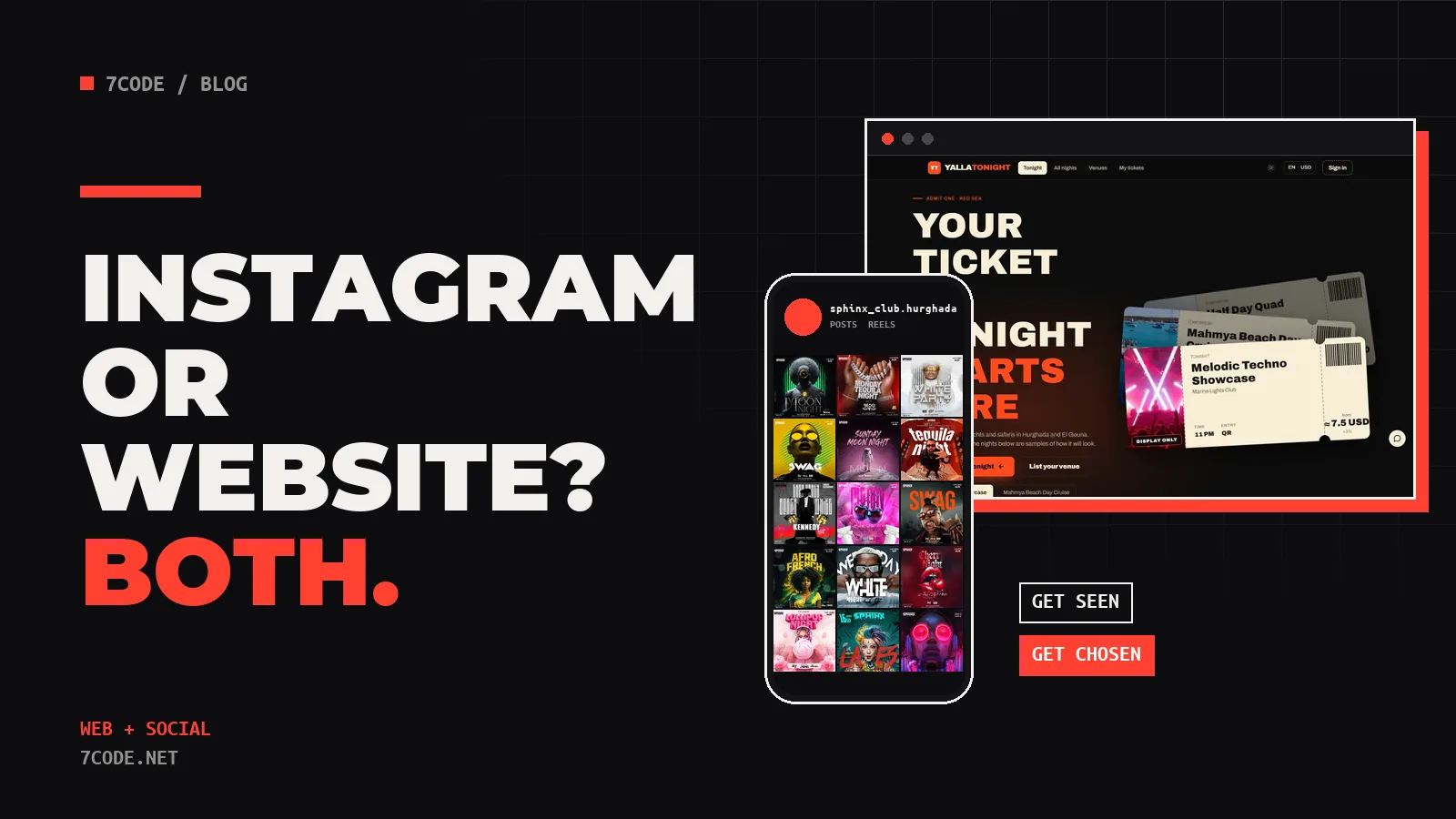
Instagram page or website? Why your business needs both
Instagram gets you noticed; a website gets you chosen. Here’s how the two work together for cafés, clubs, tour companies and shops in Hurghada.
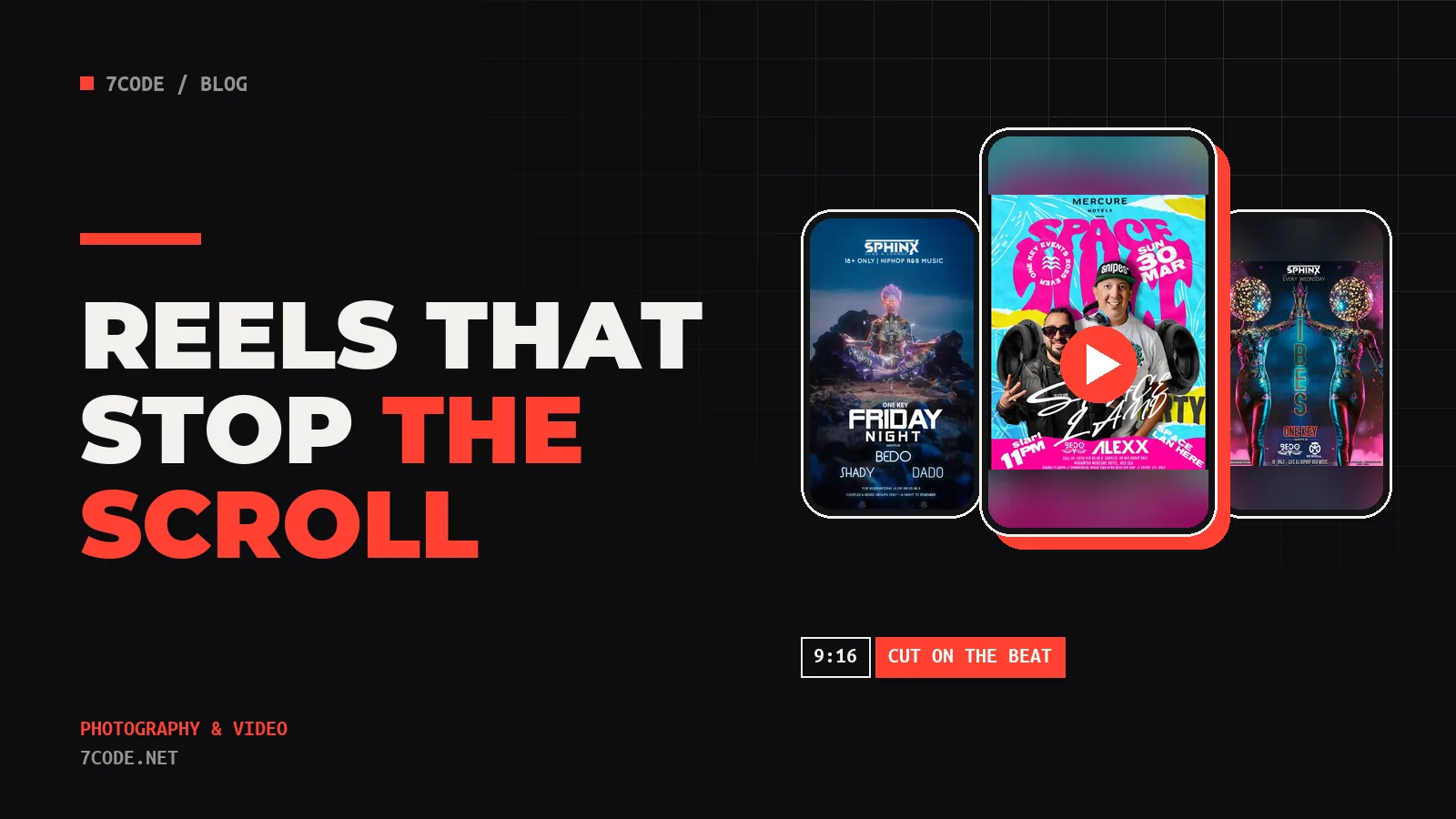
Reels for hotels & venues: content that stops the scroll
Practical shooting and editing tips for hotel, beach and nightlife reels — from the first second to the caption — based on the reels we film and edit in Hurghada.
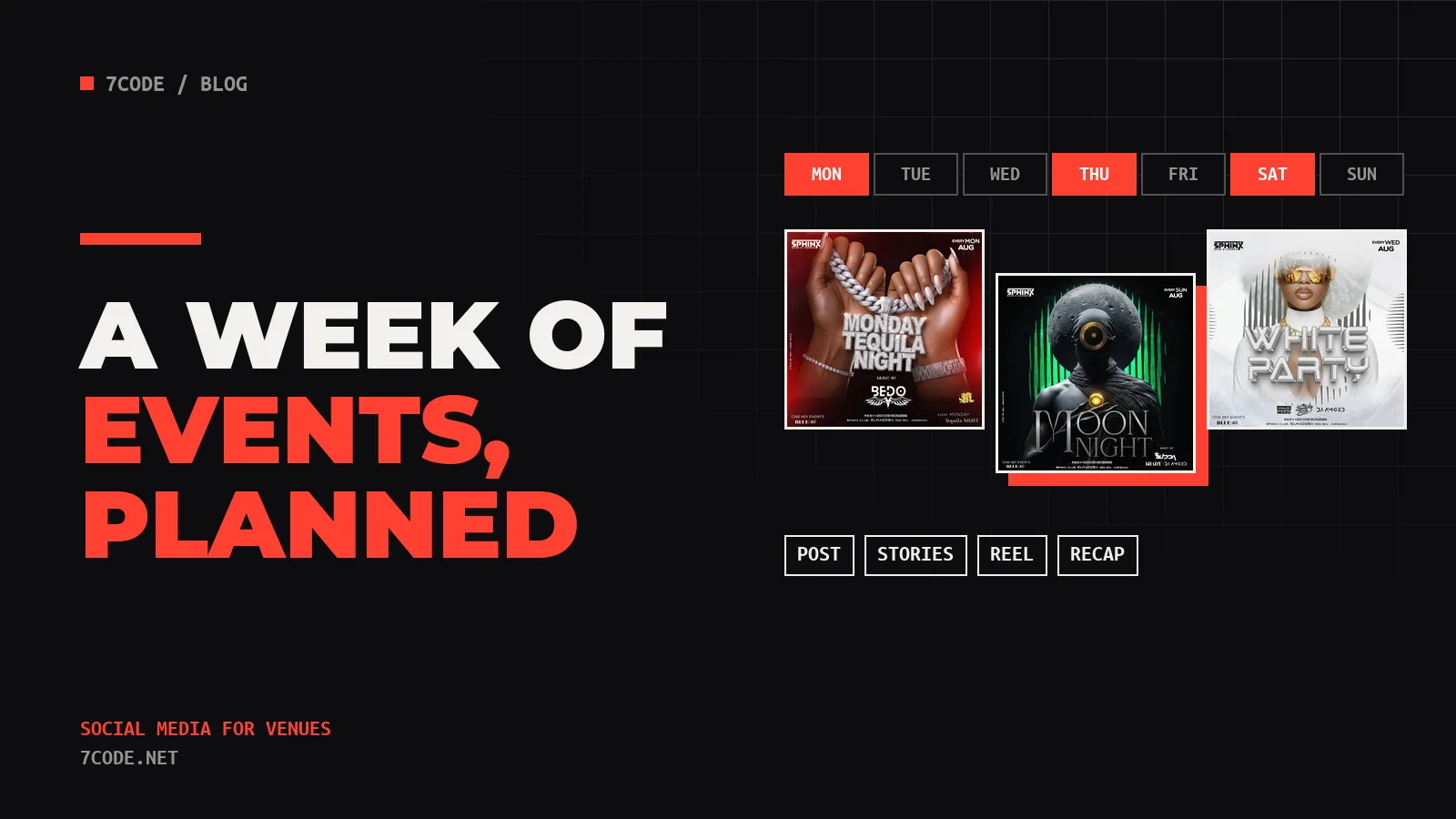
Social media for clubs & venues: planning a week of events, flyers and stories
A club lives on a weekly rhythm. Here’s how we plan a week of event content — flyers, stories and reels — so every night is promoted on time and the feed still looks like one brand.