Hotel websites on the Red Sea: how to win more direct bookings
Many guests find your hotel on a booking platform, then check your own website before they decide. Here’s how to make that visit end in a direct booking.
A guest in Munich or Warsaw is planning a week in Hurghada. They open a booking platform, compare a few hotels, read the reviews and save two or three favourites. Then many of them do one more thing before paying: they look for the hotel’s own website.
That visit is your chance. If your site is slow, confusing or out of date, the guest goes back to the platform and books there — and you pay commission on a guest who was already looking at you. If it’s clear, fast and gives them a reason to stay, the booking can come straight to you.
We build booking websites for Red Sea businesses and shoot photo and video for hotels and venues on the coast. Here’s what makes the difference between a hotel website that’s just a brochure and one that takes bookings.
Don’t fight the booking platforms — use them
Booking platforms aren’t the enemy. They bring guests from countries where your hotel would struggle to be seen on its own, and for most properties they will stay an important channel.
The goal isn’t to leave them. It’s to make sure that when a guest comes looking for you directly — after seeing you on a platform, on Instagram or on Google Maps — your own website is the easiest and most attractive place to book. Every booking you win that way is one you don’t share.
Give guests a reason to book direct
If your website shows the same room at the same price with less information than the platform, there’s no reason to book there. Guests need a small push:
- A direct-booking perk: a welcome drink, late check-out when available, a room upgrade when available, or a transfer from Hurghada airport.
- Flexibility: clearer cancellation terms or a smaller deposit for direct bookings.
- Something the platforms don’t show: a short video of the room, a guide to the house reef, the evening entertainment programme.
- A human: “Questions? Message our reservations team on WhatsApp.” A real person replying beats any form.
Before you promote a lower direct price, check your contracts with the platforms for rate-parity terms. Perks and flexibility are often easier to offer than a different price.
Guests don’t need a big reason to book direct. They need a clear one, shown right next to the price.
A booking engine that doesn’t feel like a different website
Most hotels take direct bookings through a booking engine connected to their property management system or channel manager. That’s the right approach: availability stays in sync and you never sell the same room twice. The problem is usually how the engine sits on the website.
- Put a date picker and a “Check availability” button on every page, visible on a phone without scrolling.
- Make the jump to the booking engine feel seamless: same logo, same colours, same language as the page the guest came from.
- Show the full price, with taxes and fees, before the last step. Surprises at the end lose bookings.
- Keep the steps short, and ask only for what you need to confirm the stay.
- Test it yourself, on a phone, with a real booking, at least once a season.
If you also sell excursions, spa treatments or dinners, those can be booked on your website too. It’s the same kind of booking logic we built for Red Sea tour companies like Noah Trips and Mr Egypt Trips.
Speak your guests’ languages
Hurghada’s guests come from all over Europe and beyond — Germany, Russia, Poland, the UK and the Czech Republic are among the biggest markets — plus Egyptian and Gulf families who prefer Arabic. A website in English only asks a lot of most of them.
- Choose languages by where your guests actually come from. Your booking reports already tell you.
- Translate everything, including the booking engine, confirmation emails and the small print.
- Give each language its own address and page titles, so Google shows a German guest the German page.
- Build Arabic right-to-left properly, not as a mirrored English page.
- Show prices in the guest’s currency where your booking engine allows it.
Photos and video that answer questions
A guest can’t walk around your hotel before they arrive. Your photos have to do it for them.
- Shoot every room type as it really is, with the view from that room — not the best view in the hotel.
- Show what guests ask about most: the beach, the pools, the house reef, the restaurants, the kids’ club or the quiet adults-only corner.
- Add short vertical videos. They work on your website and on Instagram, and they show atmosphere better than any photo.
- Update them when something changes. A renovated restaurant shown in old photos sells less than it should.
Good photography is the biggest single upgrade most hotel websites can make. That’s why we usually plan a photo and video shoot together with a new site — you can see the kind of media production we do.
Answer the questions before they’re asked
Guests read reviews to find out what the hotel’s website didn’t tell them. Answer those questions on your own pages instead:
- How far is the hotel from Hurghada airport, and do you offer transfers?
- What exactly does all-inclusive include — drinks, à la carte restaurants, opening hours?
- Is the beach sandy or rocky? Is there a jetty or a house reef?
- Is it family-friendly, adults-only, or both?
- How good is the Wi-Fi? Is there a gym, a spa, a pharmacy nearby?
A clear FAQ on each relevant page helps guests decide. It also helps Google — and the AI assistants many travellers now ask for recommendations — understand exactly what you offer.
Fast on a phone, anywhere
Many guests look at your site on a phone, often over roaming data or weak Wi-Fi. Heavy sliders, huge uncompressed photos and autoplay videos make the first screen slow, and a slow site loses people before they see a single room.
Compress your images, keep the first screen light, and test the site on a real phone over mobile data. If you’re not sure how yours performs, our free website check gives you a quick picture.
Be easy to find on Google
- Keep your Google Business Profile accurate: photos, phone number, website link and the official booking link.
- Ask your booking engine or channel manager whether it supports Google’s free hotel booking links, so your own rate can appear next to the platforms in Google’s hotel results.
- Write proper page titles and descriptions for every room type and every language.
- Connect Google Search Console and analytics, and track completed bookings — not just visits.
Where to start
If you can only do a few things this season, do these:
- Book a room on your own site from your phone, and fix everything that annoyed you.
- Add one clear reason to book direct, shown next to the price.
- Make sure the WhatsApp button reaches someone who answers.
- Replace the oldest photos on the site.
- Add the languages your biggest markets speak.
If you’d like help, see what we do for hotels, run the free website check, or request a quote. For the content side, read our guide to reels for hotels and venues.
More articles
All articles →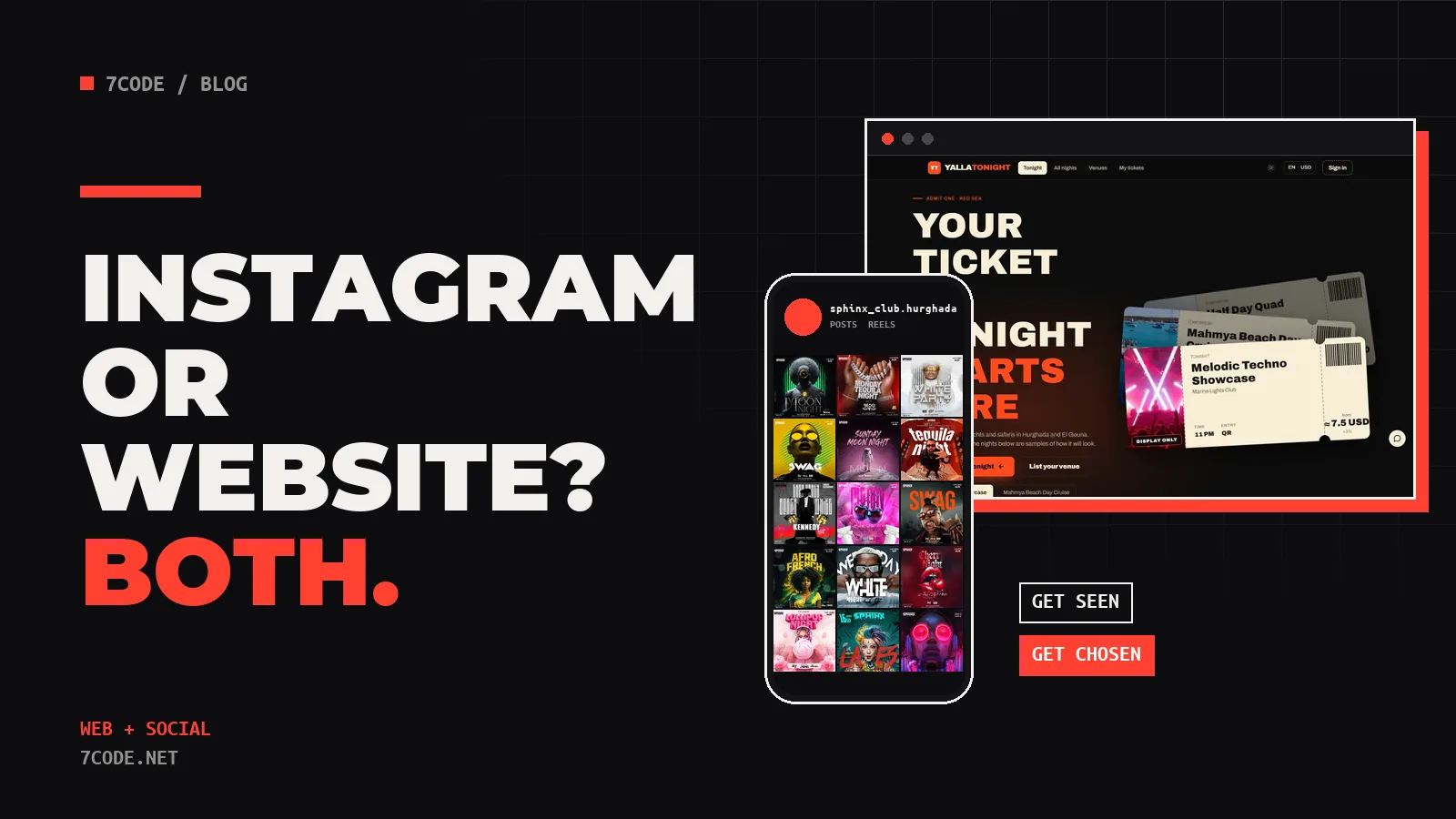
Instagram page or website? Why your business needs both
Instagram gets you noticed; a website gets you chosen. Here’s how the two work together for cafés, clubs, tour companies and shops in Hurghada.
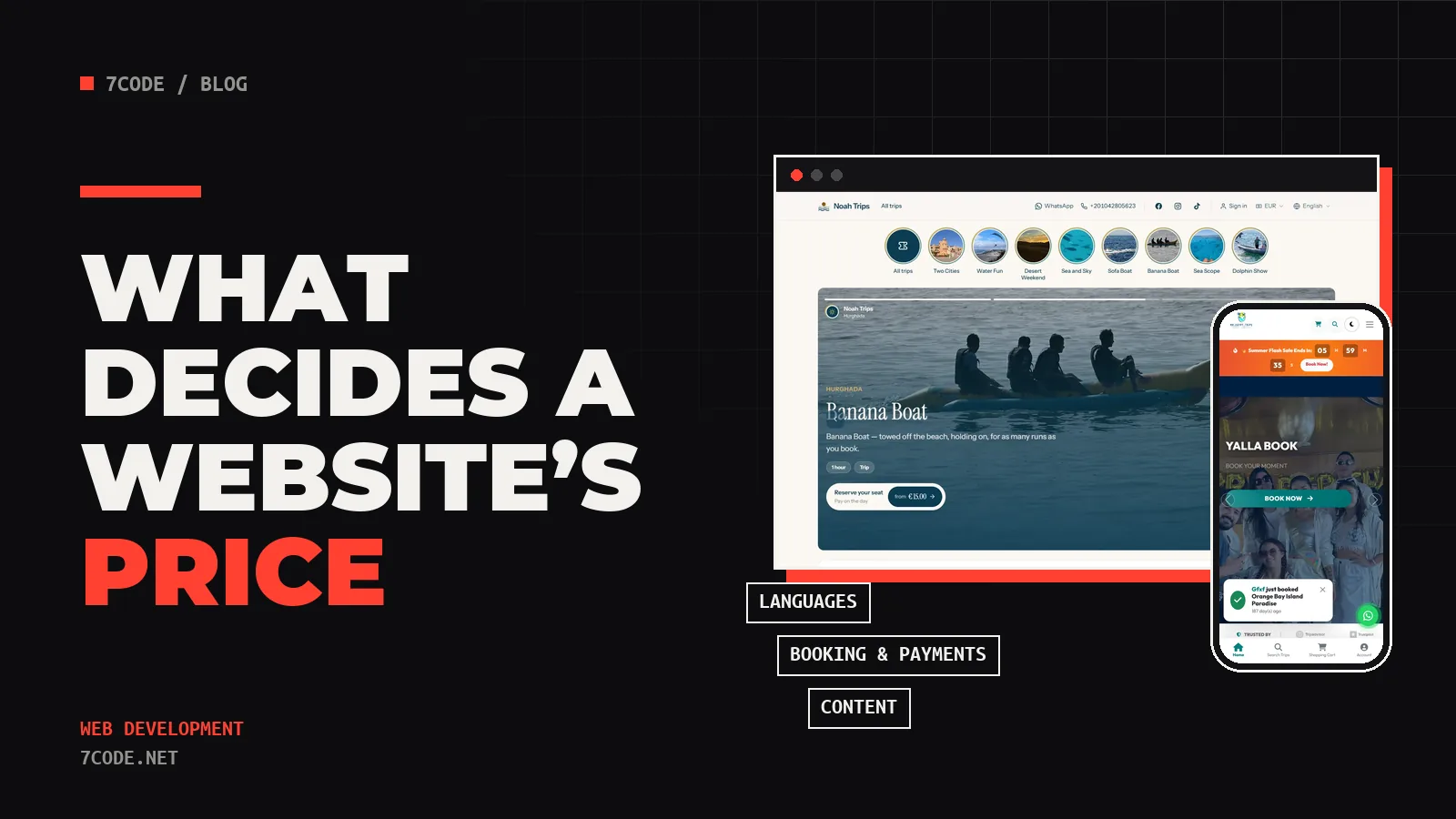
How much does a website cost in Hurghada? What actually decides the price
There’s no honest one-number answer — but there are clear factors behind every quote. Here’s what really moves the price of a website, and how to plan yours.
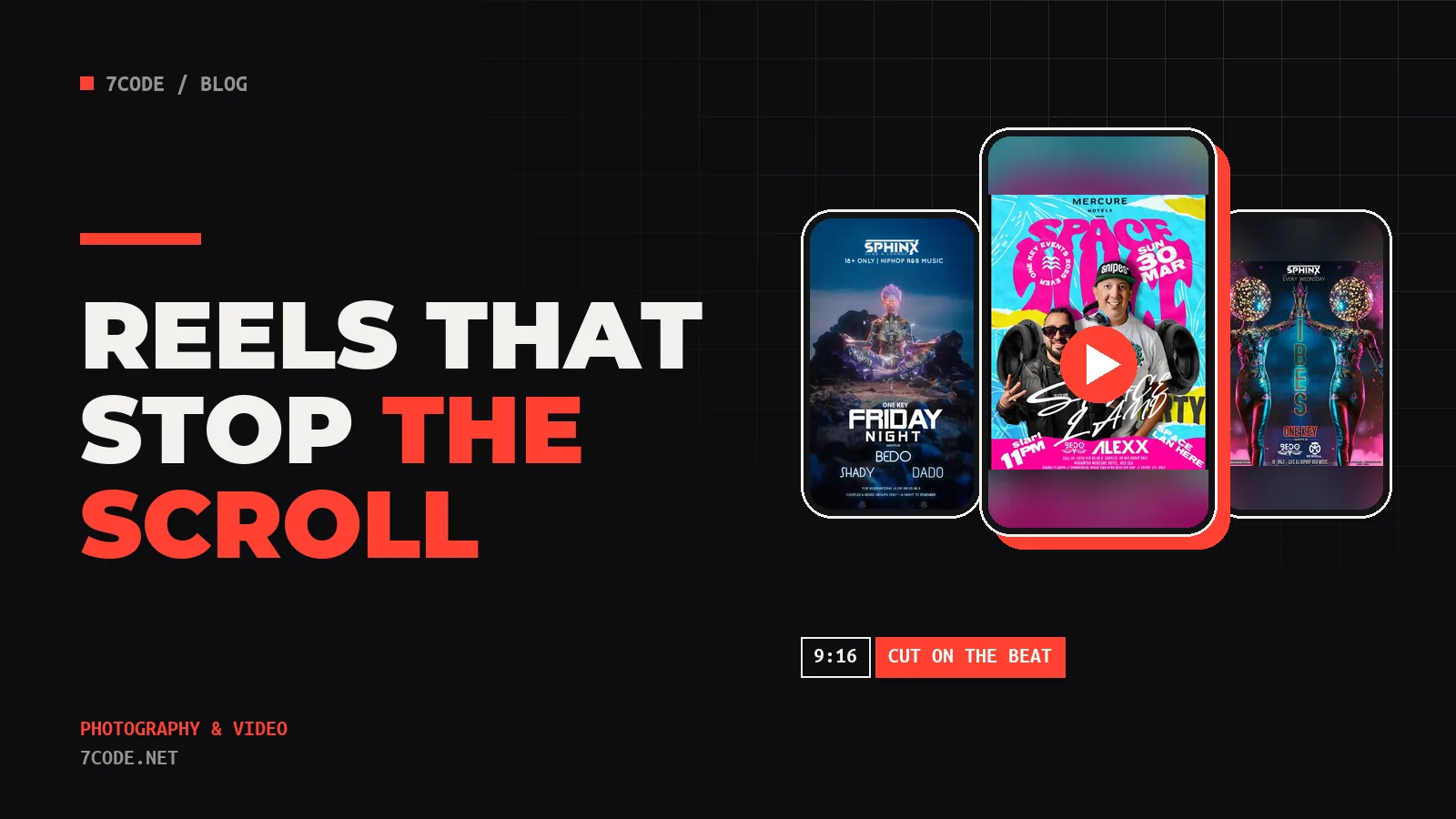
Reels for hotels & venues: content that stops the scroll
Practical shooting and editing tips for hotel, beach and nightlife reels — from the first second to the caption — based on the reels we film and edit in Hurghada.